Medical Acupuncture & Dry Needling
Medical Acupuncture and Dry Needling are very similar but have some distinct differences. They can produce fantastic results by themselves or combined with other modalities such as massage.
Medical Acupuncture
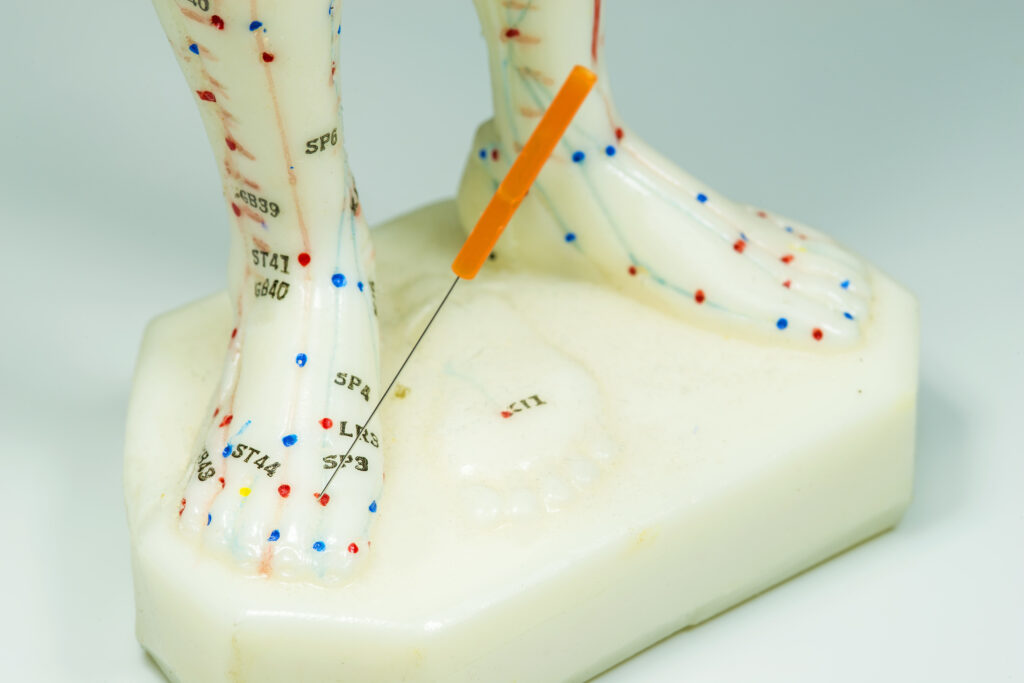
Originates from Traditional Chinese Medicine (TCM). Traditional Chinese medicine is based on Qi, which is the flow of energy around the body. This energy travels in channels around the body which are all interconnected. These channels can be tapped into at certain points (acupoints) to help energy flow more freely and helps the body to heal. Although the theory may seem a bit out there, research has shown that stimulating acupoints does have an effect on the neurological system. Research has also shown that the channels (meridians) exist can be highlighted in scans when acupoints are stimulated.
Western medicine has taken on certain aspects of TCM acupuncture and created Medical Acupuncture which combines our diagnosis techniques with needling these acupoints. Acupuncture is generally used in this context to treat pain.
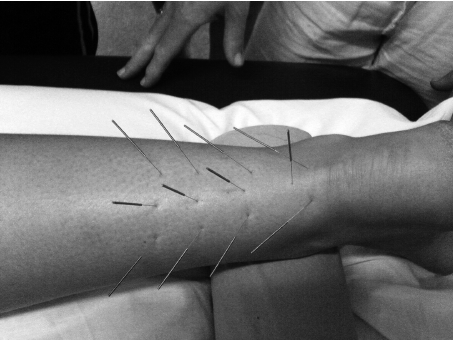
Needles are inserted into the skin/muscle at specific points and then stimulated, they are normally left in for between 5-30 minutes.
Dry Needling
Dry needling differs as it does not always use the exact acupoint but targets the trigger point (muscle spasm/knot) instead, although around 70 % of trigger points correspond with an acupoint. A needle is inserted in to the muscle or tendon to help release the trigger point. It also increases blood flow to the area to help with healing. Needles are inserted for up to 3 mins.
What type of needles does it use?
They are very fine needles made of strong surgical steel. They do not have a hole going through them like thicker injection needles so they do not cut the skin. They have a tube covering them to help with insertion, which gets taken off after it has been inserted.
What does it feel like?
Usually you just feel the plastic tube on top of your skin before the needle is tapped in. It is normal to feel a warm, tingly feeling around the needle. Sometimes you feel an ache in the muscle, or you might have a twitch response if a trigger point is touched. This is a normal response and it shouldn’t hurt.
What are the effects of Acupuncture & Dry Needling?
The main effects of both Dry Needling and Acupuncture are on…
Muscle Knots/Trigger Points – Normally when a muscle needs to contract it needs an electrical impulse that causes chemical reactions to take place which cause movement. When trigger points occur in muscles, there is no electrical impulse to start the movement. It is actually an imbalance in the chemicals which cause the muscle to keep contracting. This is where ‘knots’ in muscles come from. Sometimes they are active so you can feel them and they may refer pain to other areas. Or you can find latent trigger points where you can only feel them when they are touched. These trigger points produce higher amounts of electrical activity than normal tissue. Inserting needles into them decreases the electrically activity and releases the trigger point. Releasing trigger points can reduce pain and increase flexibility.
On Pain – Acupuncture releases chemicals that produce an analgesic effect so it provides pain relief. Research is showing its uses in chronic pain where painkillers are not been very effective. The science behind chronic pain is quite complicated but acupuncture has been shown in some cases to help reboot the system that is producing pain.
What conditions can Acupuncture & Dry Needling Treat?
Tennis/Golfer’s Elbow, Back pain/Sciatica, Headaches (cause needs to be confirmed before treatment), Neck issues, Plantar Fasciitis, Achilles Tendonitis , General muscle tightness/ trigger points.
Is Acupuncture & Dry Needling Safe?
Acupuncture has been around for around 2000 years so our predecessors made all the mistakes when coming to placement of needles! There are certain structures in the body that need to be avoided (e.g. lungs) so the muscles around them are either not needled or the needles are angled away from them. From a hygiene point of view, the needles are sterile, used once and then disposed of and the skin is cleansed beforehand. There is minimal risk of infection.
Contraindications
Acupuncture may not be suitable for you if you suffer/have the following;
- Active swellings/open wounds/ lymphedema
- Pregnancy
- Uncontrolled epilepsy
- Aneurysm
- Advanced osteoporosis
- Diabetes if it is affecting the skin
- Use of anticoagulants/ blood clotting issues.
- Hepatitis or other blood bourne disorders
Recent...